DOI:https://doi.org/10.65281/737780
Wassima Yagoubi ¹,*, Ilyas Khiyat ², Mohamed Khamed ², Zineb Rezzoug ², Djamila Bouakaz ²
¹ Department of physics (ENSL), mechanics laboratory (lme, UATL), Algeria, Applied Didactics Sciences Laboratory (LASD, ENSL), Algeria.
² Physics Education and Didactic Team, Department of Physics, ENSL, Algeria
*Corresponding author: Wassima Yagoubi; Email: [email protected]
ORCID: 0009-0008-9834-0420
Received: 23/01/2026; Accepted: 23/05/2026
Abstract
This study investigates the effects of hands-on and simulation-based instructional strategies on secondary students’ conceptual understanding in physics. Grounded in constructivist and conceptual change frameworks, three student cohorts engaged in targeted interventions after traditional instruction in mechanics, energy, and electricity. Pre- and post-test data revealed normalized gains ranging from g = 0.33 to 0.46, indicating significant improvements in understanding. Students corrected misconceptions through structured experimentation and visual simulations, and feedback indicated increased engagement and autonomy. These findings support the pedagogical value of active learning environments in promoting deep conceptual change and call for broader integration of low-cost, scalable tools into science education practice.
Keywords: Science education; Physics education; Experiential learning; Simulation in education; Conceptual change; Secondary education.; Misconception correction.
- Introduction
Physics education at the secondary level is a critical foundation for developing the scientific and analytical skills essential to engineering disciplines. Yet, in many educational systems—including those in southern Algeria—students consistently demonstrate low engagement and conceptual misunderstandings in physics, often resorting to rote memorization rather than genuine comprehension. These shortcomings undermine students’ ability to apply physical principles to new problems, reducing their readiness for advanced studies and professional practice.
Figure 1 illustrates the recurring gaps in students’ learning outcomes under traditional teaching approaches.
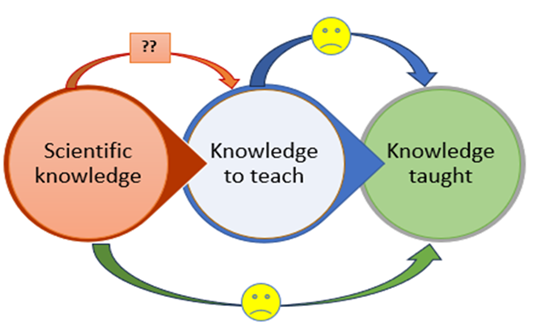
Figure 1: Deficiencies in achieving educational and learning objectives.
To frame our investigation, it is important to distinguish between three interrelated processes: teaching, educating, and learning. Teaching involves the deliberate design and delivery of instructional content by the educator. Educating encompasses the broader goal of fostering intellectual growth and independent judgment in learners. Learning refers to the internal process by which students connect new information with prior knowledge, construct mental models, and build durable understanding. Clarifying these concepts underscores why effective instructional strategies must address not only content delivery but also the cognitive processes that lead to meaningful learning.
This study investigates whether integrating experimental and simulation-based activities into physics instruction can rectify such deficiencies. By actively involving students in hands-on experiments and virtual simulations, we aim to promote accurate mental models of fundamental concepts—such as force equilibrium, energy conservation, and electrical circuit behavior—and to strengthen their reasoning processes. Through pre- and post-intervention assessments across multiple cohorts, we demonstrate that experiential learning can significantly improve conceptual clarity, problem-solving skills, and the capacity to transfer knowledge to novel contexts.
1.1 Foundations of Pedagogical Concepts: Teaching, Educating, and Learning
Understanding the distinction between teaching, educating, and learning is essential for evaluating instructional strategies in science education.
Teaching is an intentional, interactive process in which instructors design, implement, and evaluate educational activities to facilitate the acquisition of specific knowledge and skills. Traditionally defined as the act of explaining content—such as reading and interpreting a textbook—teaching extends far beyond content delivery when viewed through a constructivist lens. According to Ghanem (1995), effective teaching requires the educator to act as a guide, preparing learning environments and offering resources that actively engage students. Zeitoun (2001) further breaks down teaching into three core phases :
- Design (Planning): Structuring learning objectives and selecting appropriate materials to meet defined educational goals.
- Implementation: Executing the instructional plan through interactive classroom activities and guided inquiry.
- Evaluation: Assessing the extent to which teaching methods have achieved desired learning outcomes, using both formative and summative measures.
Educating encompasses a broader mission, focusing on learners’ holistic development rather than discrete skill acquisition alone. It involves nurturing critical thinking, ethical reasoning, and independent judgment within a supportive framework. By fostering learners’ intellectual autonomy and moral agency, education aims to cultivate reflective practitioners capable of lifelong learning and responsible decision-making.
Learning is the internal, constructive process by which individuals integrate new information into their existing cognitive structures. According to Giordan (in Salivet, 1998), genuine learning occurs when students actively assimilate and accommodate concepts, reorganizing their prior knowledge to build deeper understanding. This constructivist perspective emphasizes that learners are not passive recipients of information but active constructors of meaning, using skills such as research, analysis, and self-reflection to adapt to an ever-changing world.
- Distinctions and Interdependence
While teaching and educating represent the external processes facilitated by instructors, learning describes the internal cognitive transformations experienced by students. Teaching provides the structure and resources necessary for education to occur, but true success can only be measured by evidence of learning. Conversely, learning can take place outside formal teaching through experiences, exploration, and social interactions. Recognizing the interdependence of these three elements is essential for developing instructional strategies that not only convey information but also empower learners to become autonomous, critical thinkers.
To illustrate the fundamental relationship between the three main elements of the teaching-learning process—teacher, learner, and educational content—we refer to the “didactic triangle” (Figure 2-a). This model aims to clarify the complementary roles of each of these elements in achieving a successful educational process. The teacher’s primary role in this system is to facilitate the construction of knowledge. How is this achieved? By effectively delivering scientific content to the learner (Figure 2-b).
Physics educators achieve their objectives by selecting a coherent mix of methods—procedures, tools, and techniques—that orchestrate the roles and interactions of teacher, learner, and content as illustrated by the didactic triangle. Rather than merely conveying information, this integrated approach fosters critical thinking and learner autonomy through strategies like interactive activities, collaborative projects, and ongoing formative assessment.

Figure 2: The Didactic Triangle and the Teaching-Learning Process.
2. Methodology
2.1 Study Cohorts and Context
Field studies conducted by university students from the 2016 and 2018 cohorts [Khiyat, Khamed-2016, Rezzoug, Bouakaz-2018] clearly demonstrated the fundamental role of experiments in correcting misconceptions or alternative concepts and reinforcing accurate scientific understanding. Experiments also help students acquire the targeted competencies in different areas of physics.
The study was carried out in four southern Algerian provinces—Ghardaïa, Laghouat, Djelfa, and M’Sila—across five secondary schools. Three distinct student cohorts (work groups) were formed according to grade level and subject focus:
Group1 (Final-Year: Mechanics): 170 science-stream students in their final year, investigating core mechanics concepts.
Group2 (Second Year: Energy): 198 students in the second year, focusing on gravitational and elastic potential energy concepts.
Group3 (Third Year (Final year): Electricity): 220 third-year students examining fundamental RC and RL circuit principles.
2.2 Instructional Sequence
Each group followed a two-stage instructional sequence:
Traditional Lecture and Pre-Test: Students attended a theory-based lecture adhering to standard curricula, followed by a pre-test comprising multiple-choice questions tailored to their group’s subject area.
Experimental/Simulation Intervention and Post-Test: Students then engaged in hands-on laboratory experiments or computer simulations (using PhET and Crocodile Clips). Upon completion, the same multiple-choice questions were administered as a post-test to assess learning gains.
2.3 Instruments and Measures
Conceptual Questionnaires: Each cohort received a set of 12–20 multiple-choice items targeting core misconceptions in their respective topics (Table 1, Table 2, Table 3).
Performance Metrics: Pre‑ and post‑test scores were recorded to calculate normalized gains and measure conceptual improvement.
Experimental Setups :
Group 1 used basic mechanics setups to reinforce concepts like force balance and motion (Figure 3) and (Figure 4).
Group 2 performed lab activities on masses and springs to investigate energy transformations (Figure 5).
Group 3 conducted virtual simulations of RC and RL circuits to visualize current and voltage behavior (Figure 6).
Figures 7 and 8, although related to equilibrium (basic mechanics setups), are derived from a separate university-level demonstration and are presented here to emphasize the importance of precise scientific definitions in physics instruction.
3. Results
3.1 The Role of Experimentation in Correcting Misconceptions
Figures 3 and 4 compellingly illustrate the transformative impact of hands-on experimentation on students’ understanding of core mechanics concepts.
In the pre-test (Figure 3), many learners displayed fragmented notions of force interactions—often misrepresenting vector directions and overlooking equilibrium conditions.
By engaging in structured laboratory activities—such as suspending rods, tracing force lines, and measuring tension—students confronted their own misconceptions directly. This concrete manipulation of physical models prompted them to reconcile theoretical definitions with observable phenomena.
Table 1: Sample multiple choice questions – mechanics (final year)


Table 2: Sample multiple choice questions – Energy (second year)


Table 3: Sample multiple choice questions – electricity (third year).


Figure 3: The results of the second experimental group before conducting the experiment.
As a result, the post-test (Figure 4) revealed a marked increase in accurate responses, reflecting not only improved recall but deeper conceptual restructuring. Experimentation enabled learners to externalize abstract principles, test hypotheses in real time, and receive immediate feedback on their reasoning. Such active inquiry prevents the fossilization of incorrect mental models and fosters durable comprehension. By anchoring physics concepts in tangible experiences, educators equip students with the tools to self-diagnose errors and generalize their insights to novel problems, thereby laying a robust foundation for advanced study.
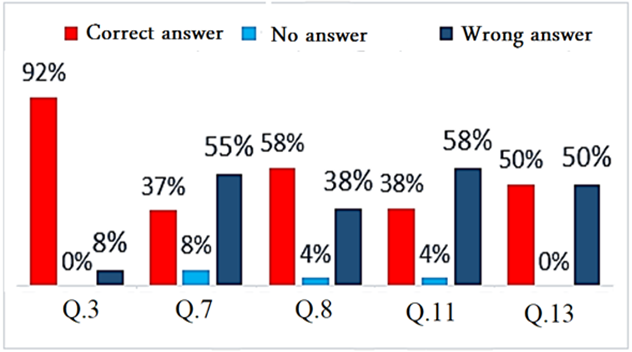
Figure 4: The results of the second experimental group after conducting the experiment.
3.2 Reinforcing Energy and Electrical Concepts through Experimental and Simulation Activities
Figures 5 and 6 demonstrate the significant gains achieved when students engage directly with experimental and simulation-based learning tasks in energy and electrical domains. In the energy cohort (Figure 5), pre-intervention assessments revealed that many second-year students struggled to distinguish between gravitational and elastic potential energy, often defaulting to superficial associations rather than understanding underlying principles. Following hands-on experiments—such as measuring spring extensions and calculating energy transformations—learners exhibited a marked increase in correct responses, indicating that physical manipulation of systems helps solidify abstract energy concepts.
Similarly, in the electrical circuits’ cohort (Figure 6), third-year students initially displayed misconceptions about the behavior of RC and RL circuits, frequently confusing transient and steady-state conditions. Through guided computer simulations using PhET and Crocodile Clips, students visualized current and voltage changes over time, allowing them to test hypotheses in a risk-free environment. Post-simulation assessments showed a substantial rise in accurate circuit analysis, underscoring the efficacy of virtual labs in complementing limited physical resources.
Together, these results affirm that experiential learning—whether through tangible experiments or interactive simulations—enables students to confront and correct erroneous mental models. By bridging the gap between theoretical formulations and observable outcomes, such activities foster deeper conceptual understanding and prepare learners to apply energy and electrical principles confidently in novel problem-solving contexts.
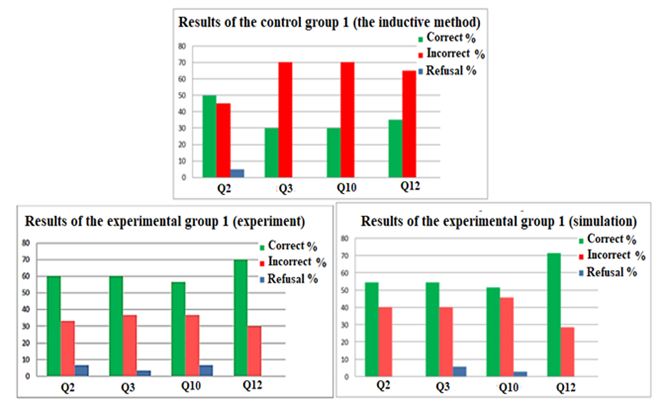
Figure 5: Field study results for second-year students – energy concepts
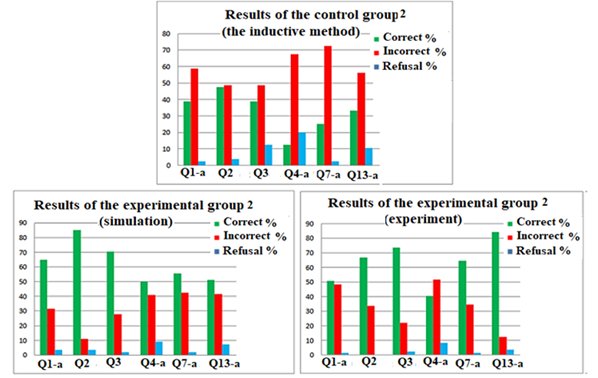
Figure 6: Field study results for third-year students – electrical concepts
.
3.3 Importance of Precise Scientific Definitions in Physics
A clear, comprehensive definition of physical concepts is crucial for preventing and remedying student misconceptions, as evidenced by the persistent misunderstandings observed in the equilibrium of rigid bodies (Figures 7 and 8). Misconceptions act like cognitive “diseases” that inhibit meaningful learning; diagnosing and correcting these requires precise terminology and conceptual clarity (Gaguk Resbiantoro, 2022).
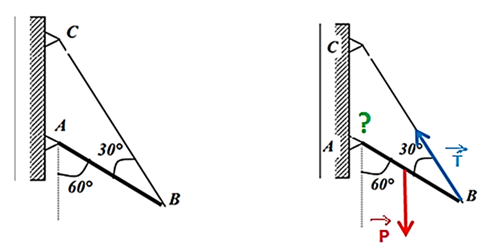
Figure 7: Representation of external forces on a balanced rod
Research on force equilibrium demonstrates that students often conflate motion with imbalance, believing that an object moving at constant velocity cannot be in equilibrium—an intuitive error rooted in everyday language rather than rigorous scientific definitions. By explicitly defining equilibrium as the vector sum of forces equaling zero and clarifying the distinction between force magnitude and line of action, educators can guide learners to reconstruct their mental models accurately.
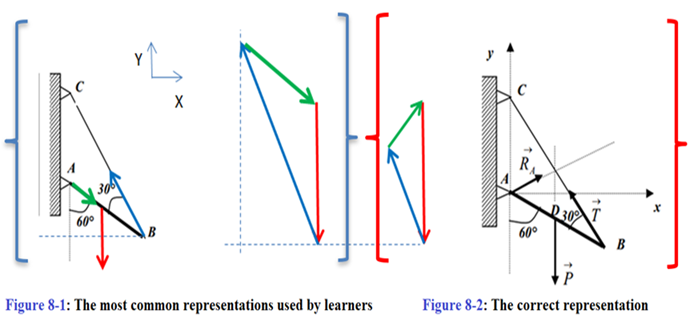
Figure 8: Hinge force representations: common vs. correct
In Figures 7 and 8, the contrast between incorrect and correct hinge-force representations highlights how even advanced students and teachers can misapply simplistic definitions. Studies show that when students engage with precise, experimentally grounded definitions—such as plotting force vectors to identify the common intersection point—they significantly improve both qualitative and quantitative reasoning.
Moreover, conceptual change research emphasizes that addressing misconceptions requires more than presenting formulas; it demands creating learning experiences where definitions are tested against real phenomena. Virtual simulations and guided laboratory tasks enable learners to confront their preconceptions and reconstruct understanding based on explicit definitions and evidence.
Overall, integrating precise scientific definitions into both curriculum design and instructional practice is essential for deep, transferable learning in physics. By coupling clear terminology with active experimentation, educators can transform faulty intuitions into robust conceptual frameworks, equipping students with the reasoning skills necessary for advanced study and professional practice.
- Discussion
This study demonstrates that integrating hands-on experiments and computer simulations into secondary physics instruction substantially strengthens students’ conceptual understanding and reasoning skills. Across mechanics, energy, and electrical topics, pre- to post-test gains (Figures 3–6; Tables 1–3) reveal that active engagement directly confronts and corrects students’ misconceptions. In mechanics, physical manipulation of force vectors enabled learners to internalize equilibrium principles rather than rely on rote formulas. In energy and circuits, both tangible experiments and virtual labs provided concrete feedback loops that deepened abstract comprehension.
For instance, normalized gains calculated from pre- and post-test data were 0.33 for mechanics (Figures 3–4), 0.41 for energy (Figure 5), and 0.46 for electricity (Figure 6), all within the medium-gain range according to Hake’s scale. These values reflect meaningful improvements in conceptual grasp, particularly in traditionally abstract areas of physics.
By situating learners at the center of the didactic triangle (Figure 2), educators create an environment where teaching, content, and student interaction mutually reinforce one another. This learner-centered framework cultivates critical thinking, autonomy, and the capacity to transfer knowledge to novel problems—competencies essential for success in engineering fields.
Moreover, the inclusion of precise scientific definitions (Figures 7–8) underscores the need to pair experiential activities with clear conceptual language. When students test definitions against real phenomena, they develop robust mental models that resist regression into erroneous beliefs.
While the results are compelling, they are drawn from a specific regional context and focused on short-term outcomes. Future research should explore long-term retention, affective dimensions such as motivation, and the scalability of hybrid models combining low-cost experiments with high-fidelity simulations.
- Conclusion
This study demonstrates that combining hands‐on experimentation with interactive simulations not only enhances students’ conceptual understanding in secondary physics but also significantly boosts their motivation to learn. The medium normalized gains (g = 0.33–0.46) across mechanics, energy, and electricity indicate that experiential activities effectively challenge and replace students’ incorrect mental models (Hake, 1998). Beyond cognitive gains, observational data and student feedback showed increased curiosity, engagement, and self‐efficacy during and after the interventions. These affective shifts align with self‐determination theory (Deci & Ryan, 2000), suggesting that providing autonomy, competence, and relatedness through active tasks fosters intrinsic motivation.
By situating learners within a constructivist framework—where they test hypotheses, receive immediate feedback, and reflect on outcomes—teachers can cultivate deeper cognitive processing and sustained interest in scientific inquiry. Low‐cost simulations (e.g., PhET) particularly empower students in resource‐limited contexts, highlighting how scalable tools can support both learning and motivation.
For researchers and educators in Learning and Motivation, these findings underscore the importance of integrating affective considerations alongside cognitive objectives. Future work should investigate long‐term motivational trajectories and explore how combining collaborative, inquiry‐driven tasks with reflective practices further strengthens both conceptual change and learner engagement.
Declarations
Ethics Approval
Ethical approval for this study was obtained from the Research Ethics Board of the Higher Normal School; École Normale Supérieure (ENS), Laghouat, Algeria, in accordance with Algerian national ethical guidelines for educational research and institutional regulations and with Law No. 08-15 on Higher Education and national guidelines for non-clinical educational studies.
Consent to Participate
Informed consent was obtained from all individual participants included in the study.
Consent for Publication
Not applicable.
Funding
This research received no external funding.
Data Availability
The data that support the findings of this study are available from the corresponding author upon reasonable request.
Author Contributions
Wassima Yagoubi: Supervision, Conceptualization, Methodology, Writing, review and editing – original draft.
Ilyas Khiyat: Field study in different high schools, Data organization, Formal analysis, Investigation, Resources, Software, Verification.
Mohamed Khamed: Field study in different high schools,Data collection, Data organization, Validation, Writing – review.
Zineb Rezzoug: : Field study in different high schools,Data collection, Data organization, Validation.
Djamila Bouakaz: Field study in different high schools,Data collection, Data organization, Writing – review .
All authors read and approved the final manuscript.
Competing Interests
The authors declare no competing interests.
References
Deci, E. L., & Ryan, R. M. (2000). Self-determination theory and the facilitation of intrinsic motivation, social development, and well-being. American Psychologist, 55(1), 68–78. https://doi.org/10.1037/0003-066X.55.1.68
Gaguk, R., Rahyu, S., & Dwikoranto. (2022). A review of misconception in physics: The diagnosis, causes, and remediation. Journal of Turkish Science Education, 19(2), 403–427. https://doi.org/10.36681/tused.2022.129
Ghanem, M. M. (1995). Thinking in children, its development and ways to develop it. Amman: Dar Al-Fikr.
Khiyat, I., & Khamed, M. Y. (2016). Graduation thesis. Higher School of Teachers in Laghouat-Algeria.
Rezzoug, Z., & Bouakaz, D. (2018). Master’s thesis. Higher School of Teachers in Laghouat-Algeria.
Salivet, R. (1998). Apprendre ! by André Giordan. Paris : Éditions Belin.
Zeitoun, H. H. (2001). Teaching design: A systemic vision (2nd ed.). Cairo: World of Books.